

Why Certificates Don’t Get You Hired (But Skills and Proof Do)

Anannya Goswami
For years, students have been taught to collect certificates as a way to build their careers. Complete a course, earn a badge, add it to your resume, and move on to the next one. While learning is important, the hiring market has quietly changed. Today, certificates alone rarely convince employers. What they truly look for is evidence that you can apply what you have learned.
The problem with certificates is not that they are useless, but that they are easy to obtain and difficult to evaluate. Thousands of candidates may hold the same certificate, yet only a few can demonstrate real understanding. Recruiters know that a certificate shows participation, not performance. It does not reveal how you think, how you solve problems, or how you handle real‑world situations.
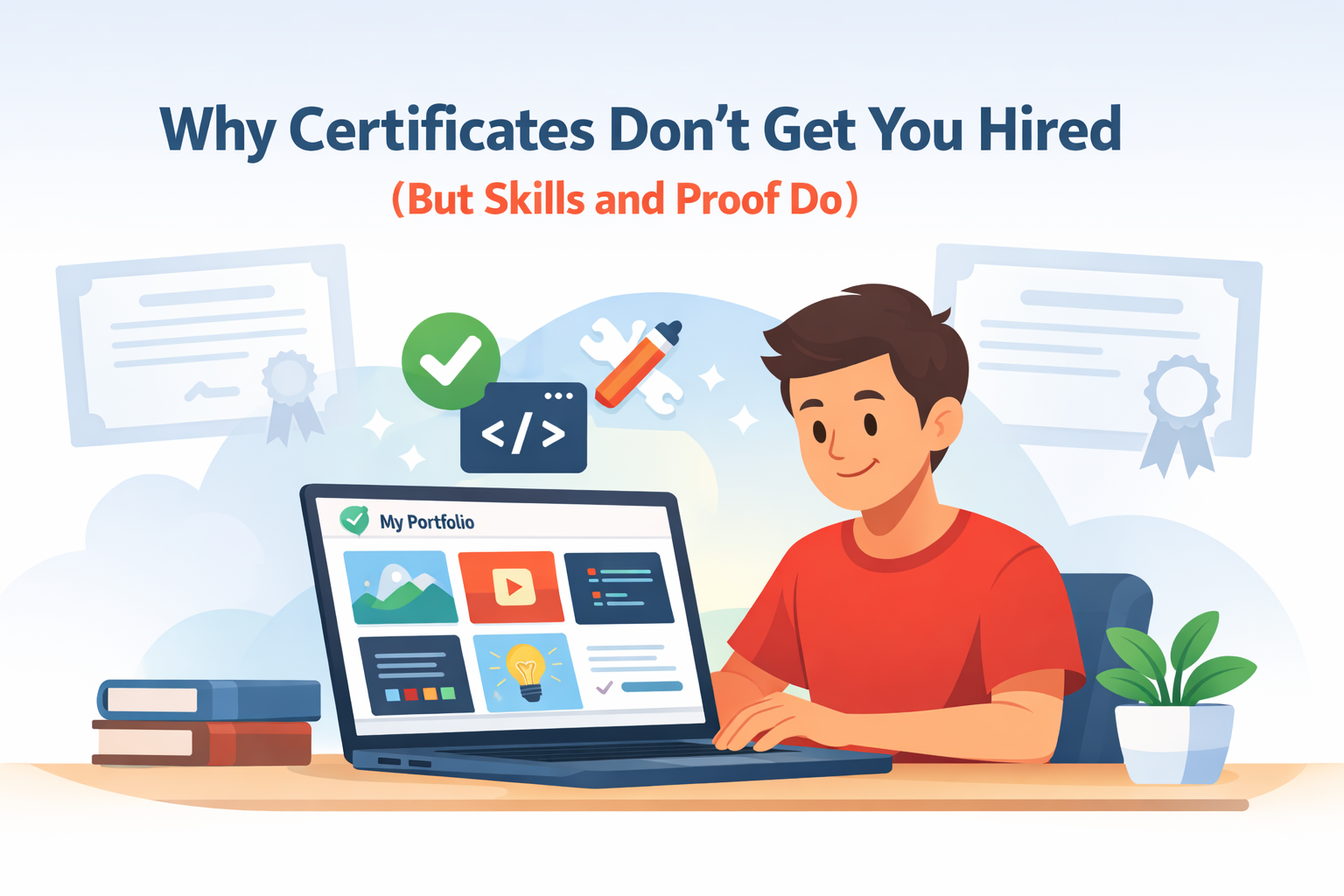
This is why the focus has shifted from qualification to capability. Employers want to see how a skill has been used, not just studied. A marketing certificate means little compared to a campaign you planned and analysed. A programming course means little compared to a project you built and can explain. Proof of work creates trust, and trust is what drives hiring decisions.
Another reason certificates fail to stand out is scale. With millions of students taking online courses, resumes start looking identical. When everyone lists the same credentials, recruiters search for signals that differentiate. Portfolios, case studies, project reports, presentations, and documented learning journeys help them understand who actually knows the subject and who only completed the syllabus.
The ability to explain your process is equally important. When you can talk about why you chose a method, what challenges you faced, what went wrong, and how you improved, you demonstrate depth. This reflection shows maturity and learning ability, qualities that employers value more than perfect scores.
Visibility plays a key role as well. Skills that are hidden cannot be trusted. This is why maintaining a clear, structured record of your work matters. Platforms like insiderOne support this proof‑based approach by allowing students to build a Skill Ledger, create Proof Drops for real projects, and receive guidance from ZENOR, an AI career assistant that aligns learning with market needs. This transforms your profile from a list of certificates into a story of capability.
Certificates may open a door, but they rarely secure an offer. What convinces employers is seeing how you apply knowledge, how you think, and how you grow. When you shift from collecting credentials to building and showcasing real skills, your employability increases naturally.
In today’s job market, proof creates confidence. And confidence is what gets you hired.