

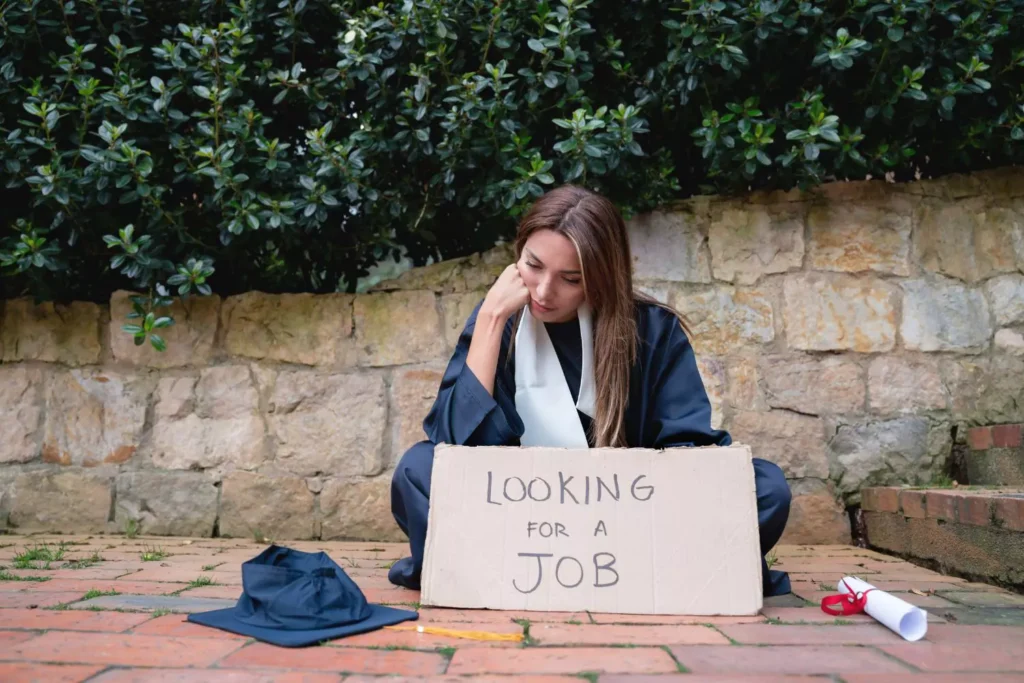
What to Do After College Without a Job: A Realistic Guide for Graduates

Anannya Goswami
Finishing college without a job in hand can feel deeply unsettling. One day you’re submitting assignments and attending lectures, and the next you’re expected to have a clear direction, a stable income, and a plan for life. When that doesn’t happen, the silence can feel loud. If you’re wondering what to do after college without a job, it’s important to know this first: this phase is far more common than it looks, and it is not a dead end.
Many graduates assume that not getting a job immediately means they did something wrong. In reality, the transition from college to work is rarely smooth. The job market moves slower than academic timelines, and hiring does not operate on graduation schedules. This gap between expectation and reality is where confusion and self‑doubt usually begin.
One of the biggest mistakes graduates make during this phase is treating “not having a job” as a failure state. When you see it that way, every day without an offer feels wasted. But unemployment right after college is not a verdict on your ability; it’s a transition window. What matters is how you use it.
The first thing to understand is that waiting passively for opportunities rarely works. Sending resumes every day without changing anything often leads to burnout and frustration. Instead of measuring progress only by job offers, it’s far more effective to focus on building employability momentum. This means working on things that make you more credible, visible, and confident over time.
After college, your biggest advantage is time and flexibility. This is the phase where you can experiment without high risk. Instead of asking “Which job will hire me?”, ask “Which skills can I start applying right now?” Skills grow only when they are used. Whether it’s writing, analysis, design, research, operations, or tech, practical application matters more than theory at this stage.
Another important shift is to stop thinking only in terms of job titles. Many graduates get stuck because they aim for roles they don’t fully understand yet. Jobs are outcomes. Skills are building blocks. When you focus on skills, you create multiple pathways instead of waiting for one perfect role to appear.
This is also the right time to start documenting what you do. Small projects, freelance tasks, self‑initiated work, or even structured learning outputs can become proof of ability. Recruiters rarely expect freshers to know everything, but they do expect evidence of effort and application. Proof reduces risk, and hiring is all about reducing risk.
Platforms like insiderOne are designed to support graduates in exactly this phase. Instead of forcing you to define your career too early, insiderOne helps you maintain a Skill Ledger that tracks what you’re actually learning and doing, create Proof Drops that capture real work and progress, and use ZENOR, an AI career assistant, to understand which directions make sense based on your current skills. This shifts your focus from “Why am I unemployed?” to “How am I becoming more employable?”
It’s also important to manage the emotional side of this phase. Being without a job can quietly affect your confidence, especially when friends or classmates seem to be moving ahead. But careers are not races with equal starting lines. Everyone’s timeline is different, even if social media makes it look otherwise. What matters is building a foundation that lasts, not rushing into something out of fear.
If you’re currently without a job after college, start by setting simple, achievable goals. Work on one skill. Build one piece of proof. Reach out to one person for guidance. Progress does not need to be dramatic to be meaningful. Small, consistent actions compound faster than panic‑driven decisions.
Not having a job right after college does not mean you are behind in life. It means you are at the beginning of a phase where choices start to matter more than marks. Use this time to build clarity through action. Jobs follow clarity, not the other way around.