

Remote Work Revolution: How the Pandemic Reshaped Corporate Culture, Productivity, and Employee Well-Being

Anannya Goswami
The COVID-19 pandemic marked a significant turning point in global functioning, triggering a profound shift from traditional systems to innovative, digitally-driven approaches that cater to the evolving demands of a hyper-connected world. One such major shift was seen in the corporate world , where age old traditional desk jobs were shifted to remote “Work From Home” jobs.
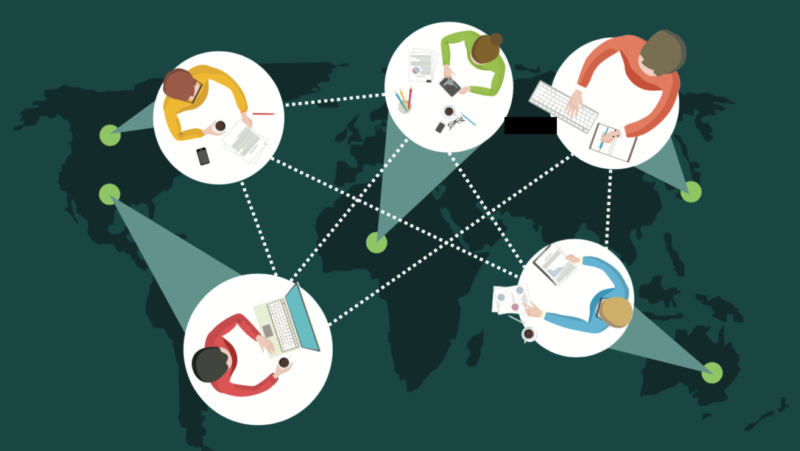
Before the advent of this pandemic, remote work was a blue blooded concept for selective set of individuals. However, following the health concerns and connectivity issues , this form of working gained more and more popularity in the corporate world and today, it's the new normal. Remote work has reshaped organizational culture, demanding intentional efforts to maintain team connection. Frequent communication through tools like video conferencing helps bridge the gap, but relying solely on technology may weaken interpersonal bonds. Without physical presence, employees often feel detached, reducing their loyalty to the organization. To preserve unity across distances, mutual respect and empathy must be cultivated fostering a culture where individuals feel valued and connected, even when working miles apart.
Several challenges are associated with this form of working:
Isolation and Disconnection:
Without regular in-person interactions, team members may experience isolation and disconnection, leading to low morale, reduced engagement, and decreased job satisfaction. Information silos can form when teams work independently with minimal communication, hindering collaboration and information sharing. Unlike their in-office counterparts, remote employees often struggle to build meaningful relationships, making it harder to foster a strong sense of connection and teamwork.
Communication barrier:
Without a shared physical space, it becomes challenging for individuals to exchange energy and build camaraderie. The lack of face-to-face interaction, coupled with time zone differences and other barriers, can hinder effective communication. A drop in spontaneous social interactions limits opportunities for relationship-building and a sense of belonging. Additionally, the flexibility of remote work can blur the boundaries between personal and professional life, making it harder for employees to maintain a healthy work-life balance.
Lack of enthusiasm and poorer mental health:
Remote work can make it harder to inspire enthusiasm and motivation, especially when differing work styles and cultural clashes lead to misunderstandings. Without the benefit of face-to-face interaction, nonverbal cues are lost, making careful listening and clear communication more difficult. Even minor misinterpretations can cause tension. This lack of social connection may also affect mental well-being.
In order to combat these challenges, it is necessary for organisations to adopt a more proactive, high communicative and healthy work environment for its employees . Communication, nurturing meaningful connections and balancing work with life remains an imperative issue. Organizations need to provide resources and train on matters such as time management, productivity, stress relief etc.
Despite the challenges around it, remote work does offer notable advantages. It enables companies to tap into a wider talent pool, no longer restricted by geographical boundaries. It also gives employees greater control over their schedules and work environments. Interestingly, research indicates that remote workers can be more productive than their office-based counterparts.
Culturally, remote work encourages the development of a more flexible, digitally skilled workforce as both organizations and employees adapt to new technologies. It also promotes a results-driven culture that prioritizes output over mere physical presence.