

Future Jobs for Students: How to Prepare for Careers That Don’t Exist Yet

Anannya Goswami
The world of work is changing faster than any previous generation has experienced. New technologies, new business models, and new ways of working are constantly creating roles that did not exist a few years ago. For students, this can feel confusing. How do you prepare for future jobs when the job titles themselves are still evolving?
The most important shift to understand is that future careers will be skill‑driven, not degree‑driven. Employers will continue to value learning ability, adaptability, and problem‑solving far more than static knowledge. Roles may change, but the need for people who can think critically, communicate clearly, work with technology, and learn quickly will only increase.
Another key trend is the rise of human‑AI collaboration. Instead of replacing people, technology is changing how work is done. Future jobs will require students to understand digital tools, work alongside automation, and focus on tasks that need creativity, judgment, and emotional intelligence. This makes skills like analytical thinking, ethical reasoning, and communication even more valuable.
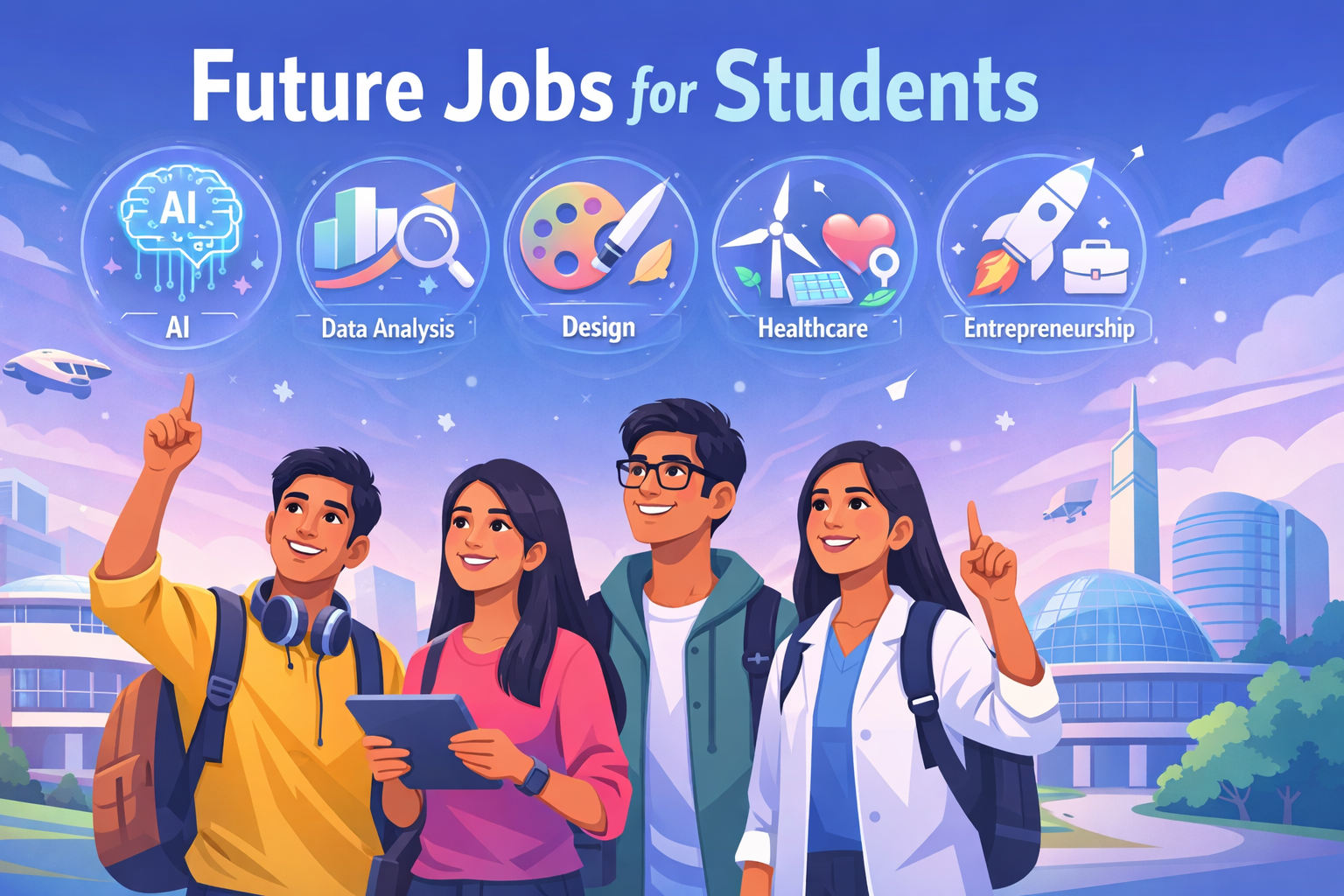
Interdisciplinary skills will also define future careers. The boundaries between fields such as technology, business, design, psychology, and data are becoming blurred. Students who can combine knowledge across domains and apply it in practical ways will have a strong advantage. Being able to connect ideas from different areas is what drives innovation.
Preparing for future jobs does not mean trying to predict one perfect role. It means building a strong, flexible skill foundation and creating visible proof of learning. Projects, internships, research, content creation, and practical experiments help students understand how their skills work in real contexts and how they can evolve with changing demands.
Guidance and structured growth play a big role here. Platforms that help students track skills, document projects, and understand emerging career paths make the process less uncertain. With tools like a Skill Ledger, Proof Drops, and AI‑based guidance, students can move from guessing about the future to preparing for it with clarity and confidence.
The future of work will reward those who are curious, adaptable, and willing to keep learning. Careers may change, but the habit of building skills and proof will always remain relevant. Preparing for jobs that don’t yet exist starts with developing the ability to grow with change.