

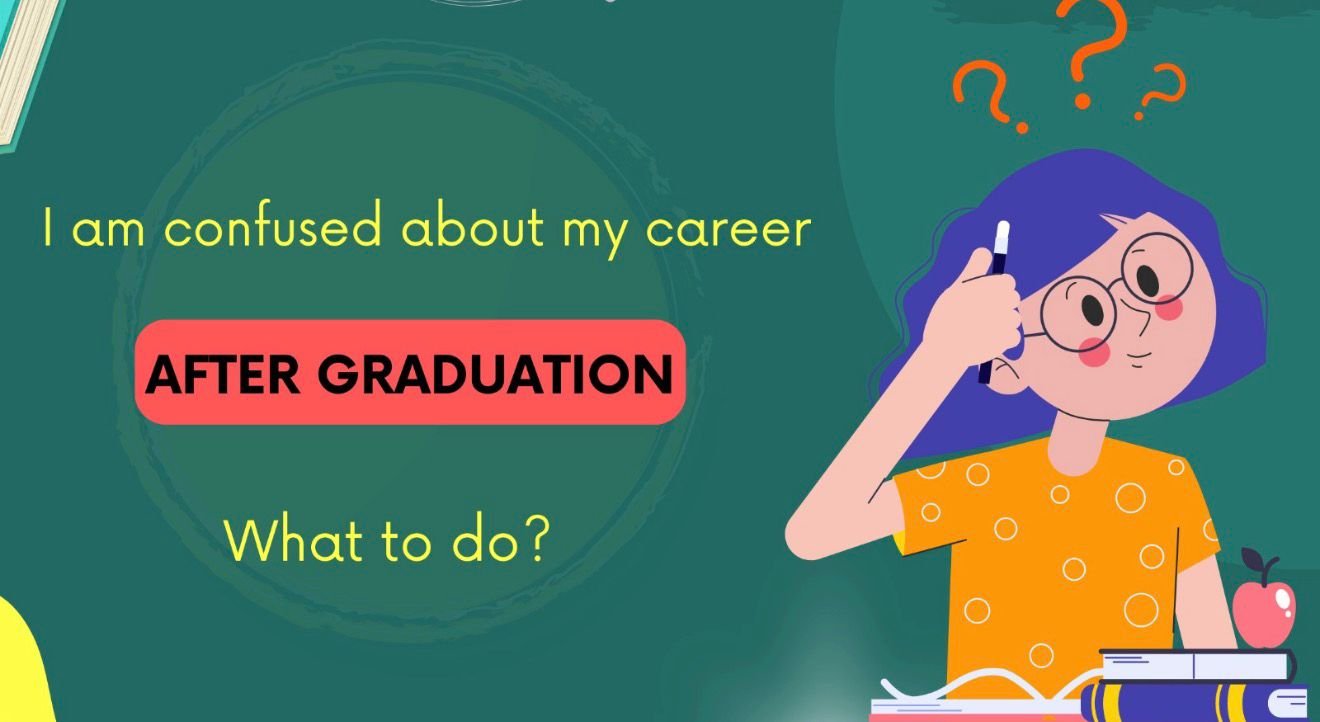
Career Confusion After Graduation: Why You Feel Lost (And What Actually Works)

Anannya Goswami
Graduation is supposed to feel like freedom.
Instead, for many students, it feels like standing at a crossroads with no signboards.
If you’re experiencing career confusion after graduation, you’re not behind, broken, or unprepared. You’re experiencing something most people go through ,but very few talk about honestly.
Why Career Confusion After Graduation Is So Common?
Career confusion doesn’t happen because you’re lazy or clueless. It happens because the system prepares you for exams, not decisions.
Here are the real reasons you feel lost:
1. You Were Trained to Follow, Not Choose
From school to college:
• Subjects were chosen for you
• Marks decided your worth
• Success was predefined
Suddenly after graduation, you’re asked:
“So… what do you want to do?”
No one taught you how to answer that.
2. You Have Information Overload, Not Clarity
Google gives you:
• 100 career options
• 1,000 influencers
• Endless advice
But information ≠ direction.
Most graduates don’t lack options — they lack a filter.
3. You’re Confusing Passion With Proof
You might like:
• marketing
• coding
• design
• management
But liking something doesn’t tell you:
• what you’re actually good at
• what the market values
• what you can grow in long-term
Career clarity doesn’t come from passion alone.
It comes from evidence.
4. Comparison Is Making It Worse
You see:
• friends getting jobs
• LinkedIn success posts
• people “figuring it out”
What you don’t see:
• their confusion
• their wrong choices
• their silent anxiety
Comparison amplifies confusion — it doesn’t solve it.
What Most Career Advice Gets Wrong
Typical advice says:
• “Follow your passion”
• “Just pick something”
• “Everyone figures it out eventually”
That’s comforting — but incomplete.
The truth:
Careers are not chosen. They are built through proof.
The Only Reliable Way to Reduce Career Confusion
Instead of asking:
“Which career should I choose?”
Ask:
“What skills do I already have proof for — and which ones can I build next?”
Clarity comes after action, not before it.
This is the missing step most graduates skip.
A Simple 3-Step Framework That Actually Works
Step 1: Stop Thinking in Job Titles
“Software Engineer”, “Marketer”, “Consultant” are outcomes — not starting points.
Start with:
• skills you enjoy using
• problems you naturally solve
• work you can show, not just claim
Step 2: Build Small Skill Proofs
You don’t need:
• a perfect resume
• a final career decision
You need:
• small projects
• real outputs
• evidence of learning
Proof creates confidence. Confidence creates direction.
Step 3: Let Direction Emerge
Once you start building and documenting skills:
• patterns appear
• strengths become visible
• career paths narrow naturally
This is how clarity actually forms.
Where Most Graduates Get Stuck
They wait for:
• confidence before starting
• certainty before acting
• validation before proof
But it works in reverse.
How insiderOne Helps You Break Career Confusion
Platforms like insiderOne are built specifically for this stage of your life.
Instead of asking you to “decide your career”, insiderOne helps you:
• Create a Skill Ledger → a living record of what you can actually do
• Build Proof Drops → real evidence of skills (projects, work, outputs)
• Use ZENOR (AI Career Assistant) → guidance based on your proof, not generic advice
Career clarity doesn’t come from guessing.
It comes from seeing yourself clearly.
If You’re Feeling Lost Right Now, Read This Carefully
Feeling confused after graduation does not mean:
• you wasted your degree
• you’re behind in life
• you’re incapable
It means you’re at the point where real career building starts.
And the fastest way forward is not choosing blindly —
it’s building proof and letting direction reveal itself.
Next Step (Don’t Overthink This)
Start small.
• Identify one skill you want to test
• Build one small proof
• Let momentum do the rest
Career confusion fades when action begins.
You don’t need answers yet.
You need evidence.