

Building a Strong Personal Brand as a Student: Why It Matters Early

Anannya Goswami
In today’s digital world, your personal brand starts forming long before your first job. It is shaped by what you learn, what you share, how you communicate, and how consistently you show your interests and efforts. For students and freshers, building a personal brand is not about becoming famous or posting constantly. It is about creating a clear, credible identity that reflects your skills, values, and potential.
A personal brand is simply the answer to the question: “What do people associate you with?” When someone looks at your profile, your work, or your conversations, do they see curiosity, reliability, creativity, problem‑solving, leadership, or technical ability? These impressions matter because recruiters, mentors, and collaborators often form opinions even before meeting you.
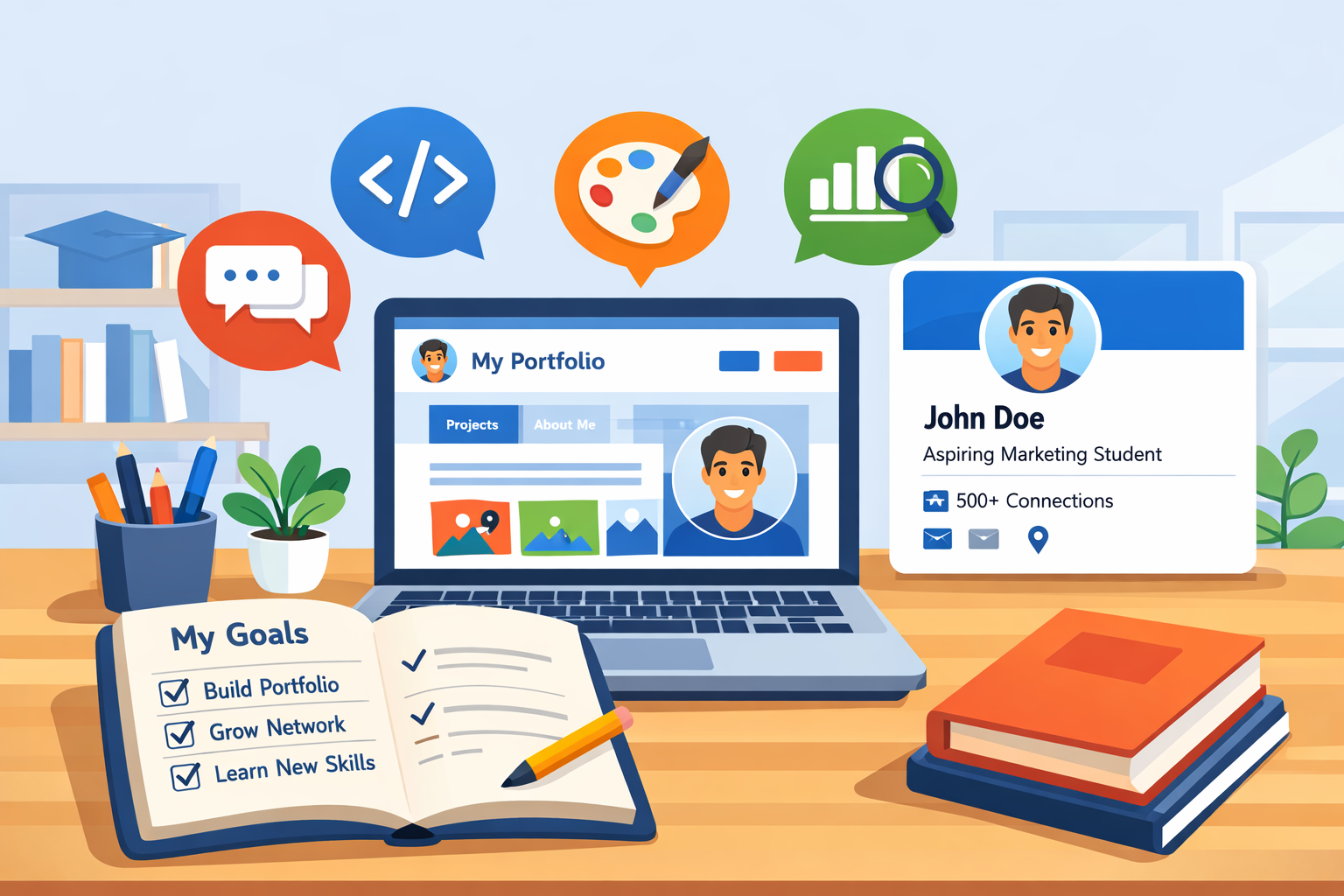
One of the strongest ways to build a personal brand is through visible learning. When you document what you are learning, the projects you are working on, the challenges you face, and the insights you gain, you show growth. This could be through blogs, LinkedIn posts, portfolios, GitHub repositories, design boards, or case studies. Visibility turns effort into credibility.
Consistency is more important than perfection. A student who regularly shares small progress updates builds more trust than someone who posts only when something looks impressive. Over time, these small signals create a reputation for seriousness and dedication.
Communication also plays a key role. How you write, how you explain ideas, how you interact in discussions, and how you present your work all contribute to your professional image. Clear, respectful, and thoughtful communication strengthens your brand naturally.
Another important element is alignment. Your activities, skills, and online presence should point in the same direction. If you are interested in data, show analysis. If you are inclined towards design, show visuals. If you like research, show structured thinking. Alignment makes your brand easy to understand and remember.
Guidance and structure can make this process easier. Platforms that help you track skills, showcase work, and reflect on progress allow you to build a brand based on evidence rather than noise. Maintaining a Skill Ledger, creating Proof Drops of real work, and using AI‑guided feedback can help students present a coherent story of growth and capability.
Building a personal brand early is not about pressure; it is about clarity. It helps you understand yourself better and helps others see your potential more clearly. When your efforts are visible and your direction is consistent, opportunities start finding you more easily.
A strong personal brand is not created in one post or one project.It is built through consistent learning, visible effort, and authentic communication over time.