

Best Ways for Students to Increase Employability While Studying at University

Anannya Goswami
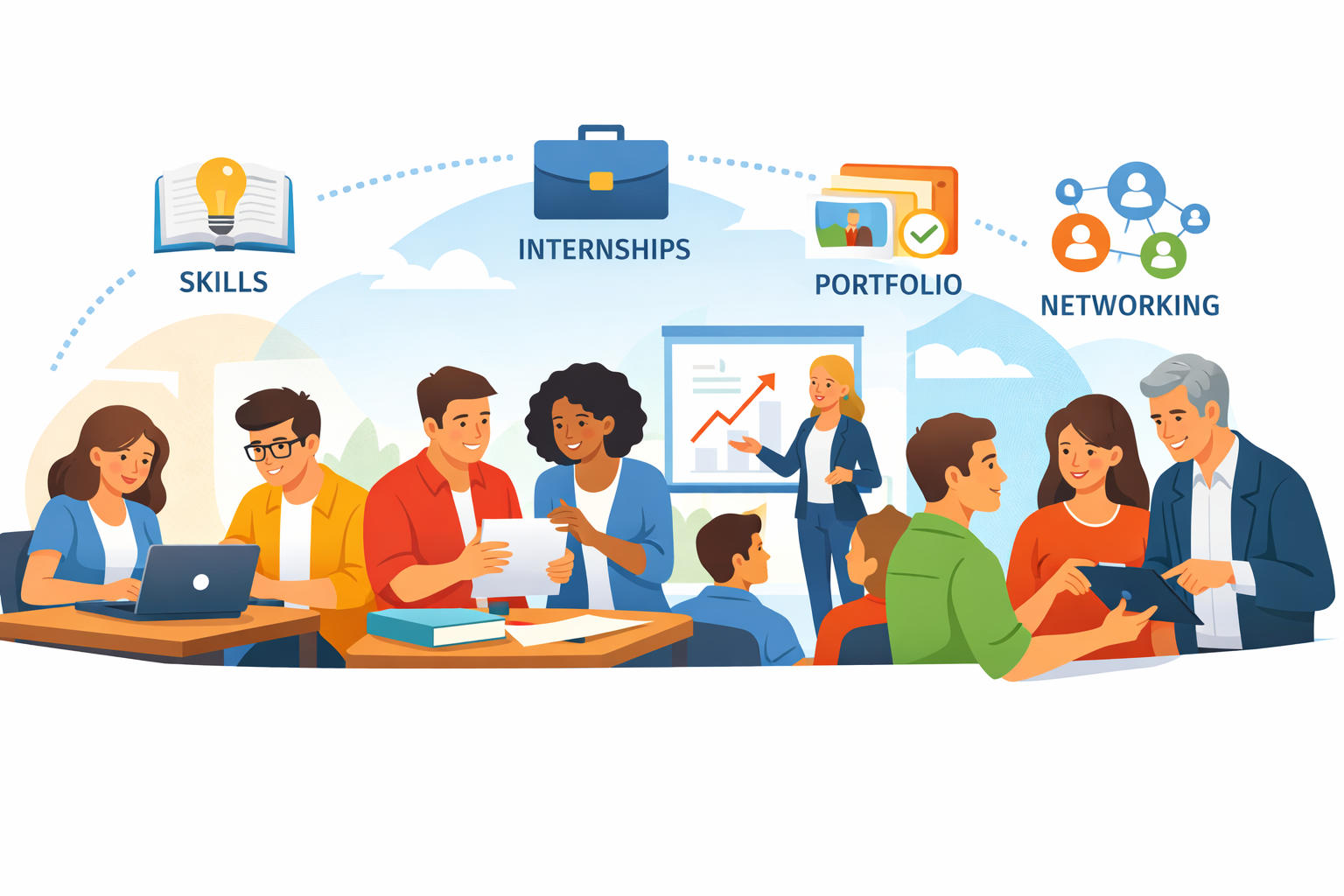
University life is no longer just about earning a degree. In today’s competitive job market, employability is built much before graduation. Students who start preparing early don’t just get jobs faster; they get better roles, stronger confidence, and clearer career direction. Increasing employability while studying is not about doing everything at once, but about building the right skills, exposure, and proof step by step.
One of the most powerful ways to become more employable is to focus on skill application, not just theory. Classroom knowledge creates understanding, but real‑world application creates credibility. Working on live projects, case studies, simulations, internships, or even self‑initiated assignments helps students convert learning into ability. Employers are far more interested in what you have applied than what you have memorized.
Another important factor is early exposure to the industry. Internships, part‑time roles, volunteering, research work, and campus collaborations give students a realistic view of how work actually happens. These experiences help in understanding workplace expectations, communication standards, and problem‑solving approaches, which makes the transition from campus to corporate much smoother.
Communication and professional presence also play a major role in employability. Students who can express ideas clearly, write structured emails, present confidently, and collaborate well in teams are always preferred. These skills are not developed overnight, but through continuous practice in discussions, presentations, group projects, and public platforms.
Building a strong digital and professional profile is equally important. Recruiters today don’t only look at resumes; they look at LinkedIn profiles, portfolios, GitHub, blogs, design work, and project repositories. When your work is visible, your chances of being trusted and shortlisted increase automatically.
Another key aspect is career clarity through guidance. Many students work hard but in the wrong direction. Right guidance helps them identify which skills are in demand, which roles match their strengths, and what steps to take next. This is where structured platforms like insiderOne add value. By maintaining a Skill Ledger, creating Proof Drops for real work, and using ZENOR, an AI career assistant, students can track their growth, validate their abilities, and receive direction based on market reality rather than guesswork.
Finally, employability grows when students adopt a learning mindset instead of a marks mindset. The willingness to learn new tools, adapt to change, accept feedback, and continuously improve is what future employers value most. Degrees may get you shortlisted, but adaptability and proof of skills get you hired.
In short, employability is not built in the final year. It is built every semester through skills, exposure, guidance, and visible effort. Students who invest in themselves early don’t just graduate with certificates; they graduate with confidence, clarity, and career readiness.