

AI in Recruitment: How Hiring Has Changed (And What It Means for Your Career)

Anannya Goswami
If you’ve been applying for jobs and feel like the process has become colder, faster, and more automated, you’re not imagining it. Artificial Intelligence is already deeply embedded in recruitment, especially at the entry‑level and fresher stage. Understanding how AI in recruitment works is no longer optional, it directly affects whether your profile is seen, shortlisted, or ignored.
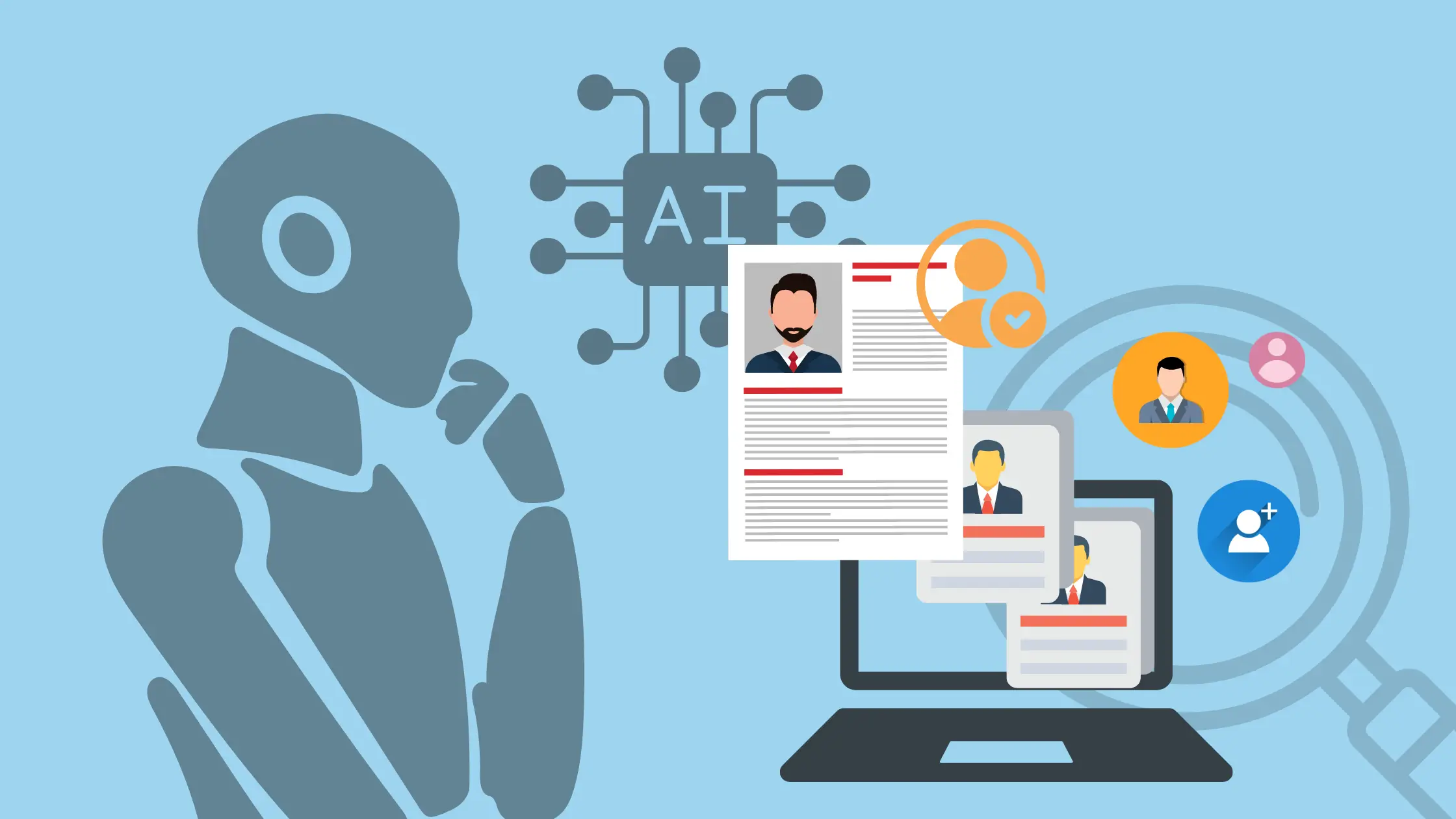
Today, companies receive far more applications than human recruiters can handle. To manage this volume, they rely on AI‑powered tools to screen resumes, rank candidates, and even predict job fit. This means your first “interviewer” is often not a person, but an algorithm trained to reduce hiring risk and save time.
AI in recruitment is primarily used to automate repetitive decisions. Systems scan resumes, match keywords with job descriptions, analyze career patterns, and filter out profiles that don’t meet predefined criteria. From the company’s perspective, this increases efficiency. From a candidate’s perspective, it creates a new challenge: you are being judged before you are understood.
One of the biggest impacts of AI hiring systems is resume screening. AI doesn’t read resumes the way humans do. It looks for structure, relevance, and alignment. If your resume lacks clarity, uses vague language, or doesn’t reflect the role’s requirements, the system may rank you low,even if you have the right skills. This is why many capable candidates never hear back. They’re filtered out before a human ever sees their application.
Another important shift is how AI evaluates skills. Traditional hiring relied heavily on degrees, college names, and job titles. AI systems, however, increasingly focus on signals ,patterns that suggest competence. These include consistency in skill development, relevance of projects, and evidence of applied learning. This is also why generic resumes are becoming less effective. AI struggles to differentiate between candidates who look identical on paper.
There is also growing concern about bias in AI recruitment. While AI is often marketed as neutral, it learns from historical data. If past hiring practices were biased, AI systems can unintentionally replicate those biases. This makes it even more important for candidates to present clear, structured, and evidence‑based profiles that reduce ambiguity and misinterpretation.
The most important thing to understand is this: AI does not eliminate human hiring, but it decides who reaches humans. Your goal is not to “beat” the system, but to work with it intelligently.
This is where proof‑based career platforms are becoming increasingly relevant. Tools like insiderOne are designed for an AI‑driven hiring world. Instead of relying only on resumes filled with self‑claims, candidates can maintain a Skill Ledger that records what they can actually do, add Proof Drops that show real work and outcomes, and use ZENOR, an AI career assistant, to align skills with market demand. Structured proof makes it easier for both AI systems and human recruiters to understand your value.
For students and freshers, the implication is clear. Career success in an AI‑driven hiring market does not come from gaming keywords or copying resume templates endlessly. It comes from building visible, verifiable skills and presenting them in a way that machines and humans can both understand.
AI in recruitment is not something to fear, but it does require adaptation. Those who continue to rely only on traditional resumes may struggle. Those who learn to combine ATS‑friendly resumes with real proof of skills will stand out.
The future of hiring is already here. And in that future, clarity, structure, and evidence matter more than ever.